


DIY Checks Littleton Homeowners Can Do Before Calling a Driveway Mudjacking Pro
This guide covers the simple DIY checks Littleton homeowners can do before scheduling a driveway mudjacking estimate. Catching the right details ahead of time helps a pro diagnose the problem faster and give a more accurate quote.
Littleton, CO, sits along the Front Range where clay-heavy soils shift with every freeze-thaw cycle. Those seasonal swings work their way under concrete slabs year after year, creating voids that let sections sink unevenly. The checks below are safe for any homeowner to do without special tools or training.
Why Sinking Driveways Are Common in Littleton, CO
Settling driveways are a known issue across the Denver Metro area. Littleton, CO, sits on expansive soils that absorb moisture and swell, then dry out and contract. That constant movement pulls support away from the underside of a slab. Neighborhoods near Chatfield Reservoir or along the South Platte corridor may also see moisture from nearby irrigation working its way under slabs, while winter freeze-thaw cycles widen any voids that form.
Understanding what is happening beneath your driveway helps you describe the problem clearly when you schedule a professional estimate. Driveway mudjacking is one of the most cost-effective ways to restore a sunken slab before the problem worsens.
What Can You Check Before Calling a Mudjacking Pro?
Homeowners can safely note several conditions without touching the slab. These observations give a technician a head start when they arrive for an on-site assessment.
Step 1: Measure the Settlement
Use a tape measure or a straight board to check how far a slab panel has dropped compared to its neighbor. Place the board across the joint and measure the gap underneath. Write down which panel is low, which direction it tilts, and the gap size at multiple points along the joint.
Step 2: Photograph Every Gap and Crack
Clear photos taken in good daylight save time during an estimate. Walk the full length of your driveway and photograph joints where one panel sits lower than another, cracks running across or along the slab, gaps between the driveway edge and surrounding soil, and any separation where the slab has pulled away from the garage apron. A side-on shot next to a tape measure is especially useful.
Step 3: Check for Drainage Problems
Water is often the reason a driveway sinks. Walk your driveway after rain and note where puddles collect and how long they linger. Standing water near or under a slab accelerates soil washout and worsens settling over time. Also check whether lawn sprinklers aim directly at the driveway edge. Littleton properties with in-ground irrigation sometimes direct more water toward slabs than homeowners realize.
Step 4: Look for Nearby Trees and Roots
Large trees planted close to a driveway can push roots beneath the slab and displace soil. Walk the driveway perimeter and note any raised surface areas near tree lines or roots visibly cracking a panel. Record the approximate distance from the tree trunk to the affected panel, since a technician will want to know whether root pressure or soil washout is the primary driver.
Step 5: Check Irrigation Lines Near the Driveway Edge
Irrigation leaks near a slab can slowly erode the soil underneath with no obvious surface sign. If you have sprinkler heads within a few feet of the driveway, check them for leaks when the system runs and flag any slow drip near the slab before your estimate. Identifying these issues ahead of time helps a technician pinpoint the cause of settlement more quickly.
What Not to Do Before the Pro Arrives
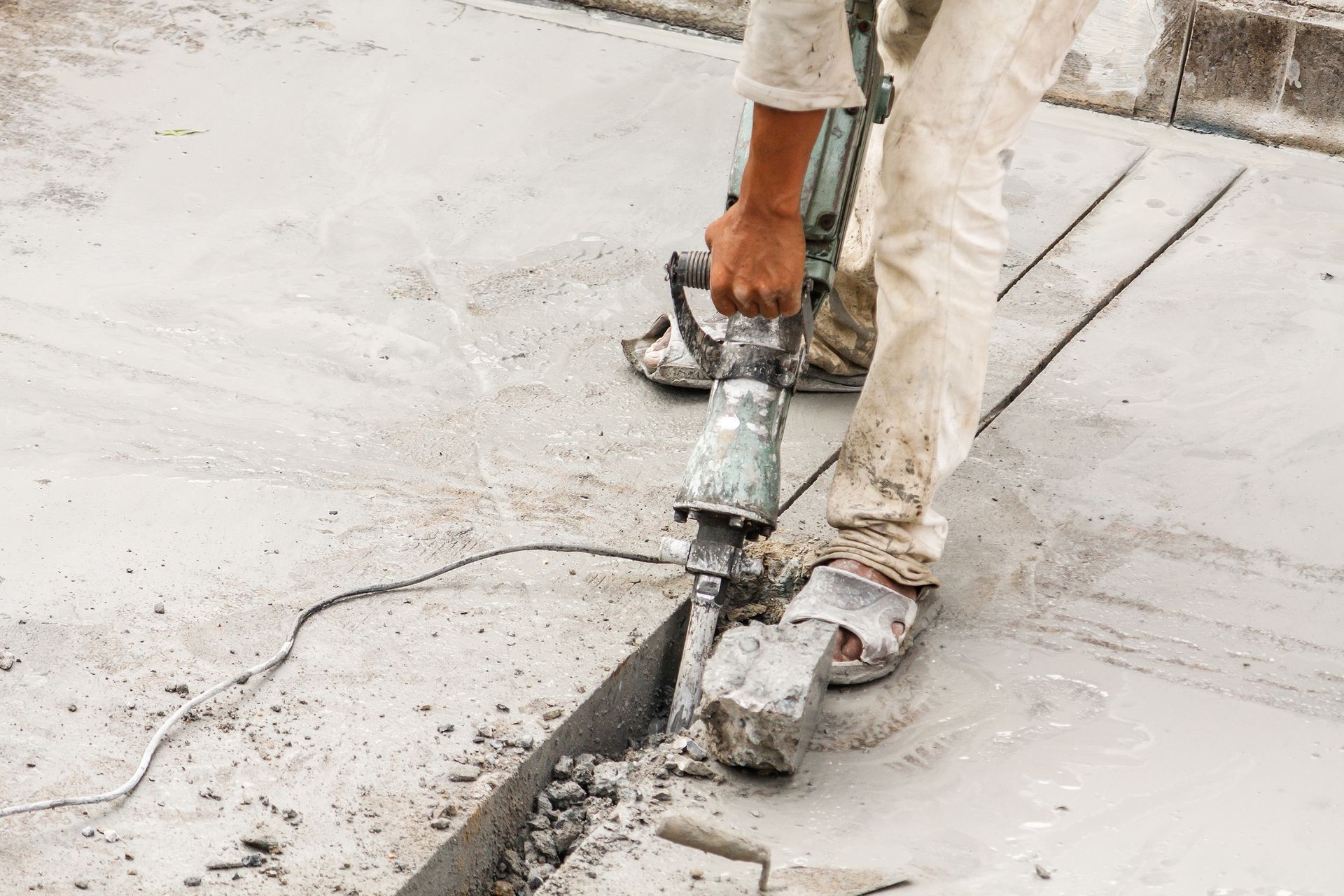
Do not fill gaps yourself with sand, gravel, or foam filler. DIY fills can shift or wash away and make it harder for a technician to assess the true extent of the void. Attempting to lift or prop a slab can crack it further or create a safety hazard. The concrete lift always requires professional equipment and materials.
Preparing a Simple Summary for Your Estimator
A short written summary speeds up your free estimate. Include the location of each affected panel, the measured gap size at each joint, any drainage issues observed after rain, nearby trees or irrigation that may be contributing, and how long you have noticed the problem.
Driveway mudjacking serving Littleton, CO, can address most settling situations, but the clearer the picture you provide, the more efficiently a technician can evaluate your slab and recommend a solution.
Ready to Get a Professional Set of Eyes on Your Driveway?
These checks put you in a strong position before your estimate. You will know what to point to, what questions to ask, and what information to have ready.
CrackerJack Mud Jacking Inc. serves the Littleton, CO, area and offers free on-site estimates with no obligation. A technician will assess the slab, walk you through the findings, and explain whether concrete slab lifting is the right approach for your situation. Call (303) 410-7787 to schedule your free estimate, or find CrackerJack Mud Jacking Inc. on Google to read reviews from neighbors across the Denver Metro area.